✨ Comprehensive Travel Guide & Verified Q&A

Top Sri Lanka Destinations & Attractions

From ancient UNESCO World Heritage rock citadels and misty highland tea valleys to pristine whale-watching bays and leopard sanctuaries. Discover the island's 12 most iconic regions with verified traveler Q&As, official ticket fees, and local logistics.

12 Iconic Destinations 8 UNESCO World Heritage Sites 36 Verified Destination Q&As CCF & DWC Statutory Citations

Sri Lanka's 12 Most Popular Attractions

Verified highlights, regional highlights, and quick in-card Q&As

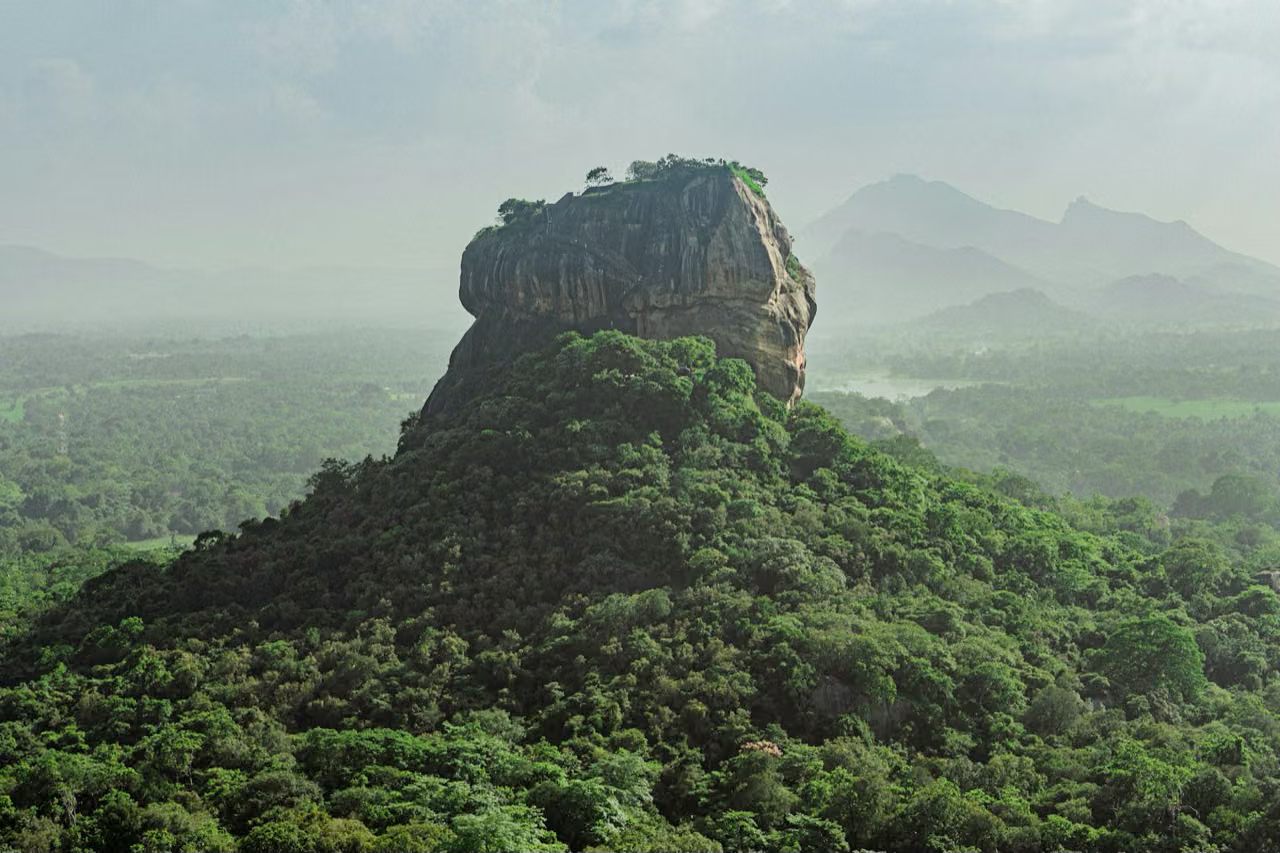
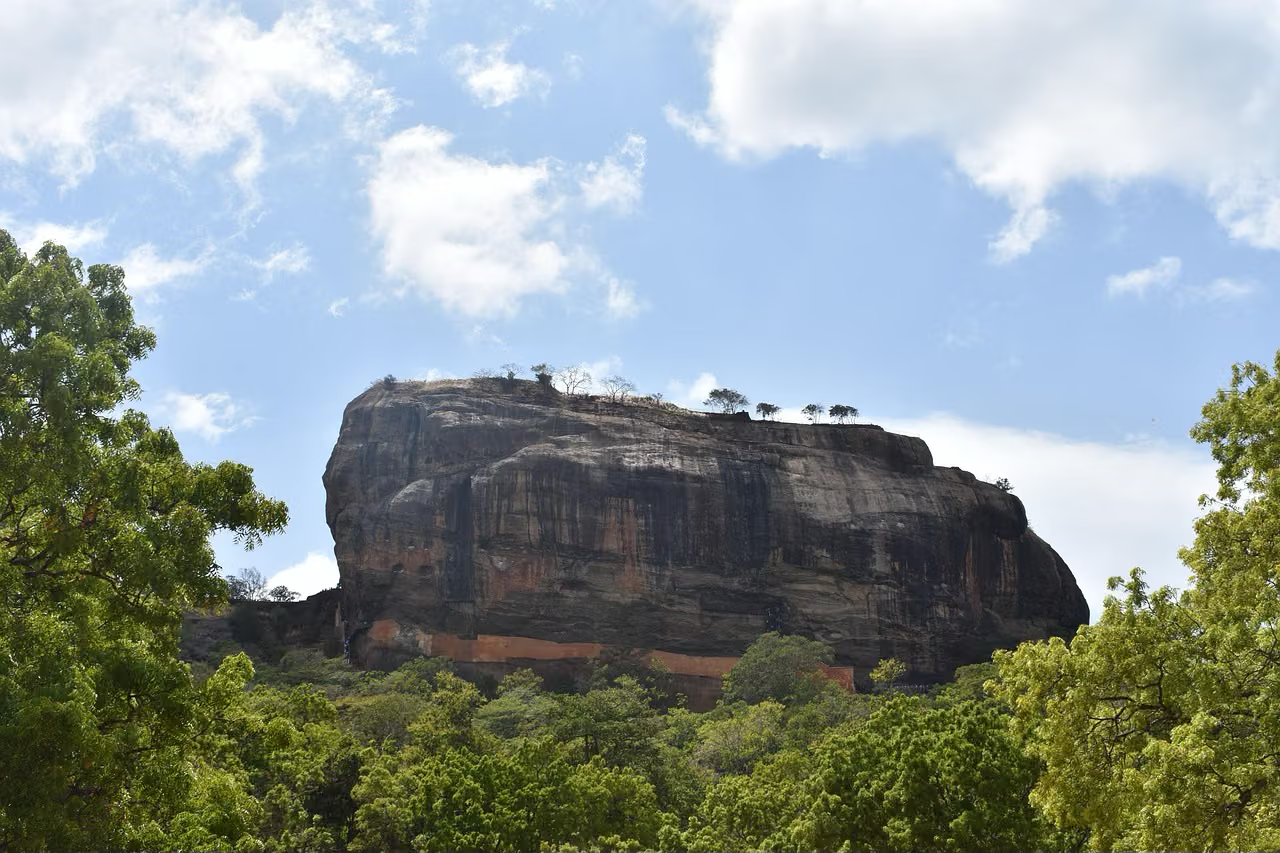
Sigiriya Lion Rock Fortress rising 200m above lush green jungle canopy in Sri Lanka
Cultural Triangle • UNESCO World Heritage

Sigiriya

Ancient Rock Fortress & Royal Citadel

The 8th Wonder of the World: King Kasyapa’s 5th-century palace fortress built atop a sheer 200-meter granite monolith, featuring ancient frescoes, water gardens, and the monumental Lion Paw entrance.

Lion Rock Climb5th-Century FrescoesMirror WallSymmetric Water Gardens
What is the official entrance fee for Sigiriya?

Foreign adult entry is $35 USD (approx. 11,500–11,800 LKR via the Central Cultural Fund), and $20 USD for children 6–12 and SAARC nationals. Children under 6 enter free. The ticket covers the fortress climb, ancient water gardens, frescoes, Mirror Wall, and on-site archaeological museum.

When is the best time of day to climb Sigiriya?

Early morning between 7:00 AM and 8:30 AM or late afternoon after 3:30 PM. The climb has approximately 1,200 steps and takes 1.5 to 2 hours round trip. Early starts avoid midday heat and mid-stair bottlenecks.
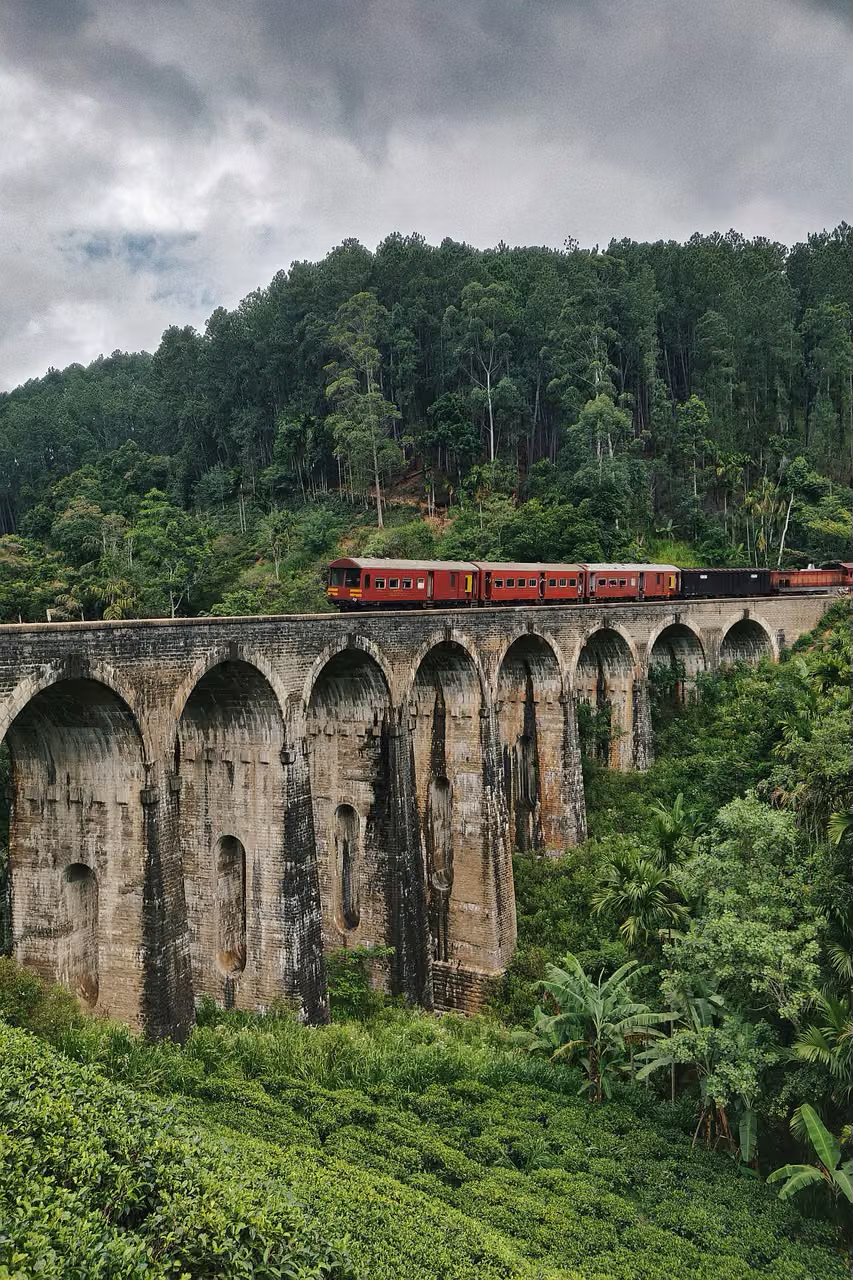
Scenic Ella mountain tea hills, green valley panorama, and Nine Arch Bridge viaduct in Sri Lanka
Central Highlands • Scenic Train Hub

Ella

Misty Mountain Peaks & Iconic Viaducts

Sri Lanka's beloved mountain sanctuary nestled among cloud forests, cascading waterfalls, world-famous rail viaducts, and scenic hiking ridges overlooking the southern plains.

Nine Arch BridgeLittle Adam's PeakRavana FallsTea Estate Hikes
What are the train times for the Nine Arch Bridge in Ella?

Passenger trains typically pass the Demodara Nine Arch Bridge at roughly 9:15 AM, 11:45 AM, 12:30 PM, 3:30 PM, and 5:30 PM. Schedules can shift due to rail delays, so arriving 20–30 minutes early is advised.

How difficult is hiking Little Adam's Peak vs Ella Rock?

Little Adam's Peak is an easy 45–60 minute family-friendly walk on paved trails with gentle steps (free entry). Ella Rock is a strenuous 3.5 to 4-hour return mountain trek across railway tracks and steep eucalyptus ridges.

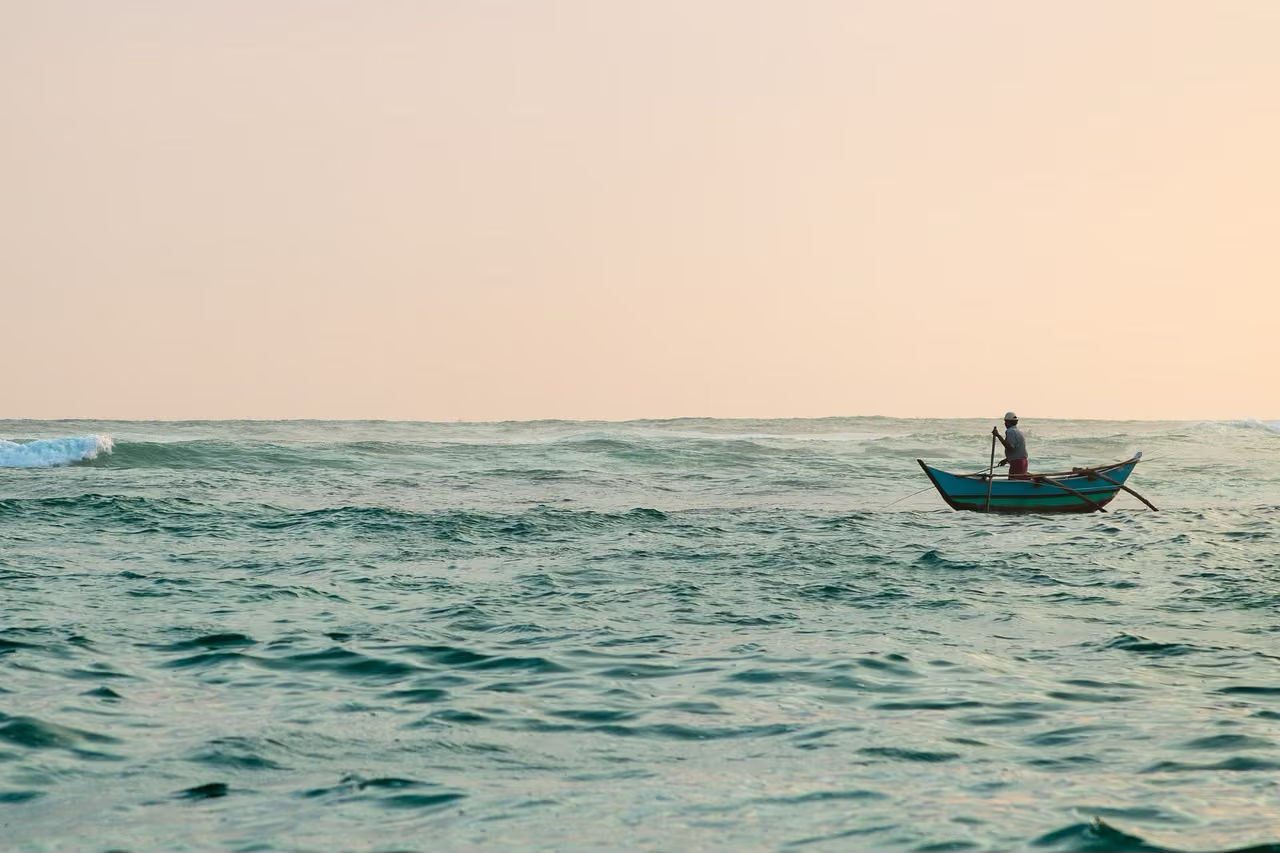
Mirissa crescent bay with turquoise ocean waves, palm trees, and fishing boats in southern Sri Lanka
Southern Coast • Marine Wildlife Sanctuary

Mirissa & Weligama

Whale Watching & Golden Surf Bays

The crown jewel of Sri Lanka's south coast, world-renowned for ethical blue whale expeditions, sunset vistas from Coconut Tree Hill, beginner-friendly surf breaks, and fresh beachfront seafood.

Blue Whale WatchingSurfing WeligamaCoconut Tree HillSecret Beach
When is whale watching season in Mirissa?

The official whale watching season runs from November to April, when calm seas allow vessels to spot migrating blue whales and spinner dolphins 3–6 miles offshore. From May to October, tours pause due to the Southwest Monsoon.

Where is Coconut Tree Hill and what is the best time to visit?

Located on a red-cliff headland at the eastern end of Mirissa Bay (15-min walk from main beach). Visit at sunrise (6:00–7:00 AM) for tranquil photography without crowds, or at sunset for golden hour over the Indian Ocean.

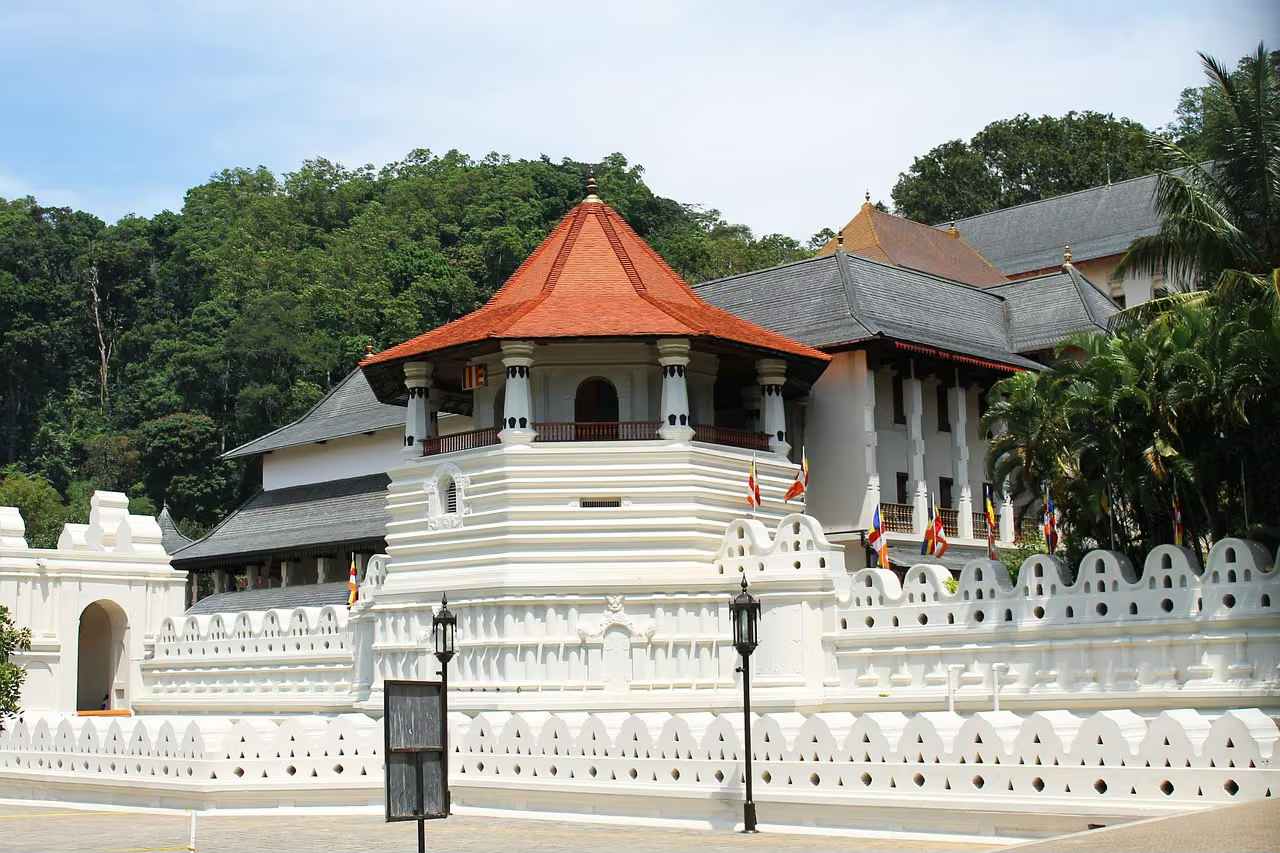
Kandy Sacred Lake view with Temple of the Tooth Relic golden roof and green forested hills
Central Province • UNESCO World Heritage

Kandy

The Sacred Hill Capital of Ceylon

The last royal capital of Sri Lanka before British colonization, nestled around a picturesque lake and revered globally as the home of the sacred Temple of the Tooth Relic, classical Kandyan dance, and lush botanical gardens.

Temple of the ToothPeradeniya BotanicalKandy LakeCultural Dance
What is the entrance fee and dress code for the Temple of the Tooth?

Foreign adult tickets are 3,000 LKR (approx. $9.50–$10 USD; SAARC 2,500 LKR; under 15 free). Both men and women must cover shoulders and knees (no shorts or tank tops) and remove shoes before entering.

What are the daily puja ceremony times at the Temple of the Tooth?

The daily religious rituals (Thevava/Puja) with traditional drumming occur at 5:30 AM – 7:00 AM, 9:30 AM – 11:00 AM, and 6:30 PM – 8:00 PM. The 6:30 PM evening ceremony is the most atmospheric.

Nuwara Eliya tea plantations, rolling emerald hill terraces, and misty mountain skies
Central Highlands • Tea Capital

Nuwara Eliya

Little England in the Central Highlands

Perched at 1,868 meters above sea level, Nuwara Eliya is the capital of world-renowned Ceylon Tea, famed for cool alpine weather, Tudor-style colonial bungalows, pristine lakes, and mountain hiking trails.

Ceylon Tea TastingHorton Plains World's EndGregory LakeTudor Architecture
What is the climate like in Nuwara Eliya and what should I pack?

Situated at 1,868m elevation, daytime temperatures average 15°C–20°C (59°F–68°F), dropping to 8°C–12°C at night. Pack warm layers: a fleece, light jacket, long pants, and a rain shell.

What time should I start the Horton Plains World's End hike?

Arrive at the park gate by 6:00 AM to 6:30 AM. Starting early ensures you reach the 870m World's End cliff before 9:00 AM, after which dense white mist frequently rolls in and blocks the view.

Sri Lankan leopard resting on a rocky granite boulder inside Yala National Park
Southern Province • World's Top Leopard Density

Yala National Park

Premier Wild Leopard & Sloth Bear Safari

Sri Lanka's second-largest and most visited wildlife park, renowned globally for hosting one of the highest concentrations of leopards (Panthera pardus kotiya) on Earth, alongside Asian elephants, sloth bears, and crocodiles.

Leopard TrackingSloth Bear SafariWild ElephantsBird Watching
When does Yala National Park close for the dry season?

The Department of Wildlife Conservation (DWC) traditionally closes Block 1 (main sector) for 4–6 weeks between early September and mid-October. Blocks 3 and 5, Lunugamvehera, and nearby Udawalawe remain open.

What is the best safari time in Yala: Morning or Afternoon?

Morning safaris (6:00 AM – 9:30 AM) and afternoon safaris (2:30 PM – 6:00 PM) offer the highest animal activity. Morning is ideal for spotting leopards on rocky outcrops; afternoon is best for elephant herds at waterholes.

Galle Fort iconic white lighthouse tower framed by palm trees against the Indian Ocean ramparts
Southwest Coast • UNESCO World Heritage

Galle & Galle Dutch Fort

Living 17th-Century Colonial Ramparts

Asia's best-preserved European fortified sea citadel, built by the Portuguese in 1588 and fortified by the Dutch from 1649. A vibrant living heritage enclave with seaside bastions, boutique jewelry shops, and artisan cafes.

Historic BastionsGalle LighthouseDutch Reformed ChurchOld Dutch Hospital
Is there an entrance fee to enter Galle Dutch Fort?

No, entering Galle Fort is completely free for all foreign and local visitors. You can freely walk the ramparts, visit the lighthouse, and stroll the cobblestone streets without any ticket.

How long does it take to walk the Galle Fort ramparts loop?

Walking the full 2.5 km rampart loop takes approximately 1.5 to 2 hours at a relaxed pace. Sunset at Flag Rock or Triton Bastion is the most popular time to experience ocean breezes and local cliff divers.

Ancient stone temple carved pillars and sacred stupa ruins in Anuradhapura Sri Lanka
Cultural Triangle • UNESCO World Heritage

Anuradhapura & Polonnaruwa

The Sacred Royal Cities of Ancient Lanka

The spiritual cradle of Sri Lankan civilization. Explore Anuradhapura's 2,000-year-old giant brick stupas and the sacred Jaya Sri Maha Bodhi tree, paired with Polonnaruwa's exquisitely preserved 12th-century Gal Vihara rock statues.

Sacred Bodhi TreeRuwanwelisaya StupaGal Vihara SculpturesAncient Reservoirs
What is the difference between Anuradhapura and Polonnaruwa?

Anuradhapura (4th c. BC – 11th c. AD) is a vast active pilgrimage site home to giant stupas and the world's oldest planted tree. Polonnaruwa (11th – 13th c. AD) is a compact, park-like medieval capital famous for stone rock-cut Buddhas.

How much are the entrance fees for Anuradhapura and Polonnaruwa?

Central Cultural Fund admission is $30 USD per adult for Anuradhapura, and $30 USD per adult for Polonnaruwa (payable in LKR). The old combined triangle ticket is discontinued; each site requires its own ticket.

Pigeon Island turquoise clear sea, live coral reef waters, and white sandy shore in Trincomalee
East Coast • Marine National Park

Trincomalee & Pigeon Island

Crystal Waters, Coral Reefs & Whale Watching

The crown jewel of Sri Lanka's East Coast, blessed with tranquil turquoise waters from May to October. Famed for Pigeon Island marine sanctuary, blue whale migrations off Swami Rock, and the cliffside Koneswaram Temple.

Pigeon Island SnorkelReef Sharks & TurtlesKoneswaram TempleNilaveli Beach
When is the best season to visit Trincomalee and Nilaveli?

May to October is the peak dry season on the East Coast. When the south coast receives monsoon rains, Trincomalee enjoys calm, transparent blue seas perfect for snorkeling, diving, and boat safaris.

Can you snorkel with sharks at Pigeon Island National Park?

Yes. Pigeon Island is famous for sightings of harmless juvenile blacktip reef sharks (1–1.5m) and hawksbill sea turtles in shallow coral gardens. Licensed boat transfers run 15 minutes from Nilaveli Beach.

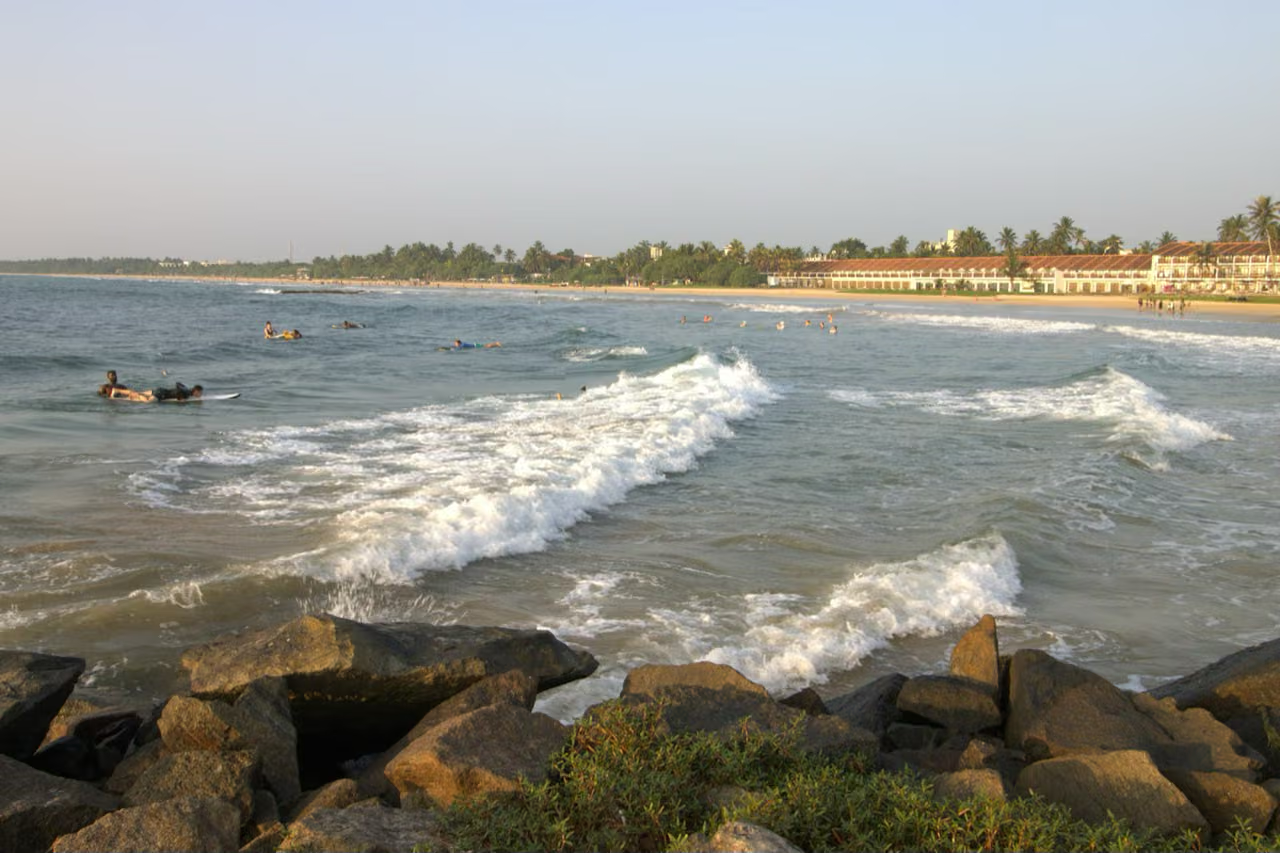
Bentota golden sand beach with turquoise waves and tropical palm trees in southern Sri Lanka
Southwest Coast • Watersports & Eco Sanctuary

Bentota & Balapitiya

Golden Beach Spits & Mangrove River Safaris

Sri Lanka's premier coastal resort playground, nestled between the Indian Ocean and the tranquil Bentota River lagoon. Famed for mangrove boat safaris along the Madu Ganga, turtle conservation, and water sports.

Madu Ganga SafariKosgoda Sea TurtlesWatersports LagoonBrief Garden
What does the Madu Ganga River Safari in Balapitiya include?

A 1.5–2 hour boat safari through mangrove tunnels across 64 river islands. Highlights include watching traditional cinnamon peeling on Cinnamon Island, visiting a 200-year-old island temple, and natural fish spa pools.

When is the best season for swimming and water sports in Bentota?

November to April is the best season for calm seas, beach lounging, and open-ocean swimming. The Bentota lagoon offers protected water sports (jet skiing, kayaking, windsurfing) all year.

Wild mother Asian elephant with newborn calf roaming the open grasslands of Udawalawe National Park
Wildlife Sanctuary • Year-Round Elephant Herds

Udawalawe & Minneriya

The Kingdom of Wild Asian Elephants

The premier elephant sanctuaries of Asia. Experience guaranteed year-round elephant herds across the open grasslands of Udawalawe, or witness 'The Gathering' of hundreds of elephants around Minneriya's ancient reservoir.

Year-Round ElephantsElephant Transit HomeThe GatheringOpen Savannah Safari
What is the difference between Udawalawe and Minneriya safaris?

Udawalawe offers guaranteed wild elephant sightings 365 days a year with 400–500 resident elephants. Minneriya is famous for 'The Gathering' (July–October) when up to 300+ elephants congregate around the drying reservoir.

Can visitors touch or feed calves at the Elephant Transit Home?

No. The Udawalawe Elephant Transit Home (ETH) enforces strict no-contact rules for wild rehabilitation. Visitors observe milk feeding from a viewing platform at 9 AM, 12 PM, 3 PM, and 6 PM.

Gangaramaya Seema Malaka Buddhist temple pavilion resting serenely on Beira Lake in Colombo
Western Province • Coastal Metropolis

Colombo

The Vibrant Commercial & Cultural Capital

Sri Lanka's bustling commercial capital, where striking colonial Dutch and British architecture mingles with sleek modern skyscrapers, vibrant open-air bazaars in Pettah, oceanfront promenades, and world-class culinary dining.

Gangaramaya TemplePettah Street MarketsGalle Face SunsetColonial Fort Walk
Is Colombo worth visiting for 1 or 2 days on a Sri Lanka itinerary?

Yes. Spending 1–2 days allows you to explore the Seema Malaka water pavilion, the vibrant Pettah bazaar, the historic Fort colonial district, National Museum, and dine at celebrated seafood venues like Ministry of Crab.

How far is central Colombo from Bandaranaike Airport (CMB)?

Colombo is roughly 32 km (20 miles) from CMB Airport. Via the Colombo-Katunayake Expressway (E03), a private chauffeur transfer takes 35 to 45 minutes under normal conditions.

💡 Answer Engine & Generative Search (AEO / GEO)

Sri Lanka Destination Q&A Guide & Traveler FAQs

Direct, factual answers to the questions travelers search for most. Statutory citations verify entrance fees, operating hours, and permits, clearly distinguishing established facts from seasonal weather variables.

Sigiriya

Sigiriya • Frequently Asked Questions

Cultural Triangle • UNESCO World Heritage

Back to Overview ↑

Q What is the official entrance fee for Sigiriya Rock Fortress, and what does it include?

Verified Direct Answer: The statutory entrance fee for foreign adult visitors at Sigiriya is $35 USD (payable in Sri Lankan Rupees at Central Cultural Fund daily exchange rates, approximately 11,500–11,800 LKR), while tickets for children aged 6 to 12 and SAARC passport holders cost $20 USD.

  • •What is included: Full access to the 5th-century rock summit citadel, the landscaped water and boulder gardens, the terraced gardens, the sheltered 5th-century Sigiriya fresco gallery, the historic Mirror Wall with ancient graffiti, and admission to the on-site Sigiriya Archaeological Museum.
  • •Ticketing rules: Physical passports are required at the Central Cultural Fund (CCF) counters to verify SAARC or child concessions. Tickets are valid for a single entry on the day of issue.
  • •Children under 6: Granted complimentary free entry across all nationalities.
  • •Source authority: Verified directly via the Central Cultural Fund (CCF) Sri Lanka and Sri Lanka Tourism Development Authority (SLTDA).

Q When is the best time of day to climb Sigiriya, and how long does the ascent take?

Verified Direct Answer: The optimal climbing window is early morning between 7:00 AM and 8:30 AM or late afternoon from 3:30 PM to 5:00 PM, avoiding the intense tropical midday heat and peak tour group congestion.

  • •Stairs and duration: The climb features approximately 1,200 steps and takes 1.5 to 2 hours round-trip for average fitness levels, including time spent viewing the frescoes and resting at the Lion Paw terrace.
  • •Sun protection: Carry at least 1 liter of drinking water per person, wear breathable cotton attire, apply high-SPF sunscreen, and wear sturdy walking shoes with good tread grip.
  • •Hornet precaution: Notice boards warn visitors to keep quiet near the summit stairs; wildlife protective netting is installed, but loud shouting is prohibited to avoid disturbing wild bees.
  • •Hours of operation: Daily from 7:00 AM to 5:30 PM (ticket counters close at 5:00 PM).

Q Should I climb Sigiriya Lion Rock or Pidurangala Rock?

Verified Direct Answer: Sigiriya Lion Rock is essential for ancient royal ruins, historical depth, and UNESCO frescoes ($35 USD), whereas Pidurangala Rock is a budget-friendly (approx. 1,000 LKR / $3 USD donation) natural hike best for watching the sunrise with an uninterrupted panoramic view of Sigiriya itself.

  • •Sigiriya Lion Rock highlights: Best for history lovers wanting to stand on King Kasyapa’s palace foundations, inspect 1,500-year-old plaster frescoes, and explore royal engineering.
  • •Pidurangala Rock highlights: Located 2 km north of Sigiriya, Pidurangala requires a steep 30-to-45-minute trek with a light boulder scramble near the top, offering the most famous postcard photography view of Sigiriya's vertical profile.
  • •Thurya Voyages recommendation: For the ultimate experience, hike Pidurangala at 5:30 AM for sunrise, and ascend Sigiriya at 3:30 PM for sunset.
Ella

Ella • Frequently Asked Questions

Central Highlands • Scenic Train Hub

Back to Overview ↑

Q What are the train schedules for the Demodara Nine Arch Bridge, and how do you reach it?

Verified Direct Answer: Trains generally cross the Demodara Nine Arch Bridge between Ella and Demodara stations around 9:15 AM, 11:45 AM, 12:30 PM, 3:30 PM, and 5:30 PM daily, though Sri Lanka Railways schedules frequently experience 15 to 45-minute delays.

  • •Access routes: You can take a 20-minute shaded walking trail through the forest from Ella town (near Art Cafe / Nine Arch Road) or take a 10-minute tuk-tuk to the upper road trailhead followed by a 7-minute downhill footpath.
  • •Viewing locations: Several elevated tea-stall cafes offer panoramic photography angles looking down on the 24-meter-high curved brick-and-stone viaduct (built without structural steel in 1921).
  • •Safety guideline: Walking along the tracks is strictly prohibited when the signal horn sounds; stay on the designated viewing slopes.
  • •Cost: Visiting the bridge viewpoint is completely free to the public.

Q What is the difference in difficulty between Little Adam’s Peak and Ella Rock?

Verified Direct Answer: Little Adam's Peak (Punchi Sri Pada) is a gentle, beginner-friendly 45-to-60-minute hike on paved paths, while Ella Rock is a strenuous, unpaved 3.5-to-4-hour mountain trek requiring good stamina and navigational awareness.

  • •Little Adam's Peak: Features a wide paved walking path winding through lush tea bushes, finishing with a well-maintained concrete staircase to the summit. Offers 360-degree views of Ella Gap, Ravana Pool, and the Flying Ravana mega zip-line.
  • •Ella Rock: Begins by walking along the operational railway tracks from Ella Station toward Kitha-Ella, crossing a footbridge over the river, and ascending a steep eucalyptus dirt trail. Trail markers can be ambiguous, so hiring an SLTDA-licensed local guide is strongly recommended.
  • •Weather note: Start both hikes early in the morning before 8:30 AM to avoid afternoon cloud cover, mist, and tropical mountain showers.

Q How long does the scenic train from Kandy to Ella take, and how are tickets booked?

Verified Direct Answer: The world-famous scenic train journey between Kandy and Ella takes between 6 and 7 hours, climbing through high-altitude tea plantations, mountain passes, and dense misty pine forests.

  • •Best side of the train: Sit on the right-hand side from Kandy to Nuwara Eliya (Nanu Oya), then switch to the left-hand side from Nanu Oya to Ella for prime gorge and tea country vistas.
  • •Booking window: Reserved 1st Class (A/C observation car) and 2nd/3rd Class reserved seats open exactly 30 days in advance at 10:00 AM Sri Lanka time via Sri Lanka Railways e-ticketing portal.
  • •High demand warning: Reserved seats sell out within minutes of release during peak seasons (December–April and July–August). Thurya Voyages provides concierge train booking as part of all guided multi-day itineraries.
Mirissa & Weligama

Mirissa & Weligama • Frequently Asked Questions

Southern Coast • Marine Wildlife Sanctuary

Back to Overview ↑

Q When is the official whale watching season in Mirissa?

Verified Direct Answer: The prime whale watching season in Mirissa spans from November to April, peaking between December and March when the southern ocean is calm and nutrient-rich waters attract migrating blue whales, sperm whales, and pods of spinner dolphins.

  • •Seasonal shift: From May to October, the Southwest Monsoon brings rough swells and high seas to the southern coast; ethical operators suspend operations in Mirissa during these months and relocate to Trincomalee on the tranquil East Coast.
  • •Sighting frequency: Blue whale encounter rates typically exceed 90% between January and March according to marine survey records from the Sri Lanka Coast Guard.
  • •Tour duration: Boats depart Mirissa Fishery Harbour early at 6:30 AM; tours typically last 3 to 4.5 hours depending on where cetacean pods are located.

Q How can travelers choose an ethical and responsible whale watching operator in Mirissa?

Verified Direct Answer: Book exclusively with operators certified by the Department of Wildlife Conservation (DWC) and Sri Lanka Coast Guard that strictly follow the Sea Mammals Observation Regulations.

  • •Ethical guidelines: Vessels must maintain a minimum distance of 100 meters from whales (300 meters if mothers with calves are present), must never cut across an animal's travel path, and must never chase or encircle marine life.
  • •Vessel standards: Reliable operators provide clean twin-engine catamarans, certified life vests for all passengers, an on-board marine naturalist, and adhere strictly to passenger limits.
  • •Motion sickness tip: The southern continental shelf has ocean swells; taking motion sickness medication 30 minutes before boarding and eating a light breakfast is strongly recommended.

Q Where is Coconut Tree Hill located and how do you access it?

Verified Direct Answer: Coconut Tree Hill is a distinctive dome-shaped red clay promontory covered in tall coconut palms, located at the easternmost edge of Mirissa Bay overlooking the open Indian Ocean.

  • •How to get there: Walk east along Mirissa Beach around the rocky point for approximately 15 minutes, or take a 5-minute tuk-tuk from Mirissa main junction to the access alley on Matara Road, followed by a 3-minute walk.
  • •Best photography timing: Arrive at sunrise (6:00 AM to 6:45 AM) to enjoy the soft golden light and gentle ocean breeze with few or no other visitors. By 9:00 AM, the hill becomes heavily crowded.
  • •Admission: The site is on public coastal land and is free to visit.
Kandy

Kandy • Frequently Asked Questions

Central Province • UNESCO World Heritage

Back to Overview ↑

Q What are the entrance fees and daily ceremony (Thevava) times for the Temple of the Sacred Tooth Relic?

Verified Direct Answer: Foreign adult admission to the Temple of the Sacred Tooth Relic (Sri Dalada Maligawa) is 3,000 LKR (approx. $9.50–$10 USD), 2,500 LKR for SAARC nationals, and free for children under 15.

  • •What the ticket includes: Full entry to the main temple sanctum, the inner shrine, the modern golden canopy, the World Buddhist Museum, the Dalada Museum, the Tusker Museum, and the historic Royal Audience Hall.
  • •Daily Puja (Thevava) times: Early Morning: 5:30 AM – 7:00 AM | Midday: 9:30 AM – 11:00 AM | Evening: 6:30 PM – 8:00 PM. During these services, the inner chamber door is opened and traditional temple drummers play in rhythmic unison.
  • •Opening hours: The temple complex is open daily from 5:30 AM to 8:00 PM.
  • •Source authority: Official ticket counters and administrative notices of Sri Dalada Maligawa.

Q What is the mandatory dress code for entering Buddhist temples in Kandy?

Verified Direct Answer: Modest attire covering both shoulders and knees is strictly enforced for all visitors regardless of gender. White or light-colored clothing is customary and deeply appreciated.

  • •Prohibited clothing: Sleeveless tops, tank tops, crop tops, shorts, mini-skirts, ripped jeans, and transparent fabrics are strictly turned away at security gates.
  • •Footwear rules: Shoes, sandals, and hats must be removed before crossing into the inner temple courtyards. Dedicated shoe collection counters are available at the entrance gates (a nominal 50–100 LKR tip is standard).
  • •Emergency wraps: Sarongs and shawls are available for purchase or modest rental near the security checkpoint if clothing does not meet regulations.

Q How much time is needed to visit the Royal Botanic Gardens at Peradeniya?

Verified Direct Answer: Plan for 2 to 3 hours to thoroughly explore the 147-acre Royal Botanic Gardens in Peradeniya, situated 5 kilometers west of Kandy alongside the Mahaweli River.

  • •Top highlights: The historic Orchid House with over 300 rare varieties, the towering Cook's Pine Avenue, the Great Javan Fig Tree with its 2,500-square-meter sprawling root canopy, the Double Coconut Palm collection (Coco de Mer), and the Spice Garden.
  • •Entrance fees: Foreign adults: 3,000 LKR | Foreign students: 1,500 LKR | Children under 12: 1,500 LKR.
  • •Best time to visit: Morning between 8:30 AM and 11:30 AM when flowers are vibrant and temperatures are pleasant for walking.
Nuwara Eliya

Nuwara Eliya • Frequently Asked Questions

Central Highlands • Tea Capital

Back to Overview ↑

Q What is the weather like in Nuwara Eliya, and what clothing is necessary?

Verified Direct Answer: Nuwara Eliya sits at an altitude of 1,868 meters (6,128 feet) and has a crisp sub-tropical highland climate, with daytime temperatures between 15°C and 20°C (59°F–68°F) and night temperatures regularly dropping to 8°C to 12°C (46°F–54°F).

  • •Packing checklist: Bring warm fleece pullovers, a medium jacket, comfortable walking trousers, wool socks, and a light waterproof windbreaker.
  • •Highland hotels: Many historic colonial boutique hotels provide open log fireplaces or electric heaters because overnight temperatures feel chilly compared to the tropical coast.
  • •Best sunny months: February, March, and April offer the lowest rainfall and clearer blue skies, coinciding with the vibrant Nuwara Eliya April Spring Season.

Q What are the essential guidelines for the Horton Plains World's End trek?

Verified Direct Answer: Visitors must arrive at the Horton Plains National Park entrance gate by 6:00 AM or 6:30 AM to complete the 9.5 km circular trail and reach the World's End precipice before 9:00 AM when thick cloud cover rolls in.

  • •The trail: A 9.5-kilometer (5.9-mile) circular trail across high-altitude montane cloud forests and windswept plains, passing Little World's End, Greater World's End (an 870-meter sheer vertical cliff drop), and the picturesque Baker's Falls.
  • •Strict Zero-Polythene Rule: The Department of Wildlife Conservation (DWC) inspects all bags at the gate. Polythene bags, plastic food wrappers, and plastic water bottle labels must be removed. Use reusable water bottles.
  • •Wildlife to spot: Sambar deer herds grazing on the plains, purple-faced langurs, and endemic highland birds.
  • •Duration: 3 to 4 hours of brisk walking on gravel and rock paths.

Q Can travelers visit working tea factories around Nuwara Eliya?

Verified Direct Answer: Yes, prominent operating tea factories including Pedro Tea Estate (established in 1885), Damro Labookellie, and Blue Field welcome visitors for guided 30-to-45-minute educational factory tours.

  • •What you experience: Watch orthodox Ceylon black tea manufacturing in motion—from initial green leaf withering and mechanical rolling to enzyme fermentation, drying, sifting, and grading.
  • •Guided tea tasting: Tours conclude with a master tasting session distinguishing Ceylon grades such as Orange Pekoe (OP), Broken Orange Pekoe (BOP), and Silver Tips.
  • •Pedro Estate specialty: Pedro processes tea during the colder night hours to preserve delicate floral aromas; daytime tours allow visitors to inspect the operational 19th-century machinery and walk through the surrounding Lovers Leap tea fields.
Yala National Park

Yala National Park • Frequently Asked Questions

Southern Province • World's Top Leopard Density

Back to Overview ↑

Q When does Yala National Park close for the annual dry season?

Verified Direct Answer: The Department of Wildlife Conservation (DWC) traditionally closes Block 1 (Palatupana, the primary tourist sector) for approximately 4 to 6 weeks between early September and mid-October during the peak of the dry season.

  • •Reason for closure: To relieve pressure on wildlife during severe water shortages, allowing natural habitats, roads, and artificial waterholes to be replenished and repaired without vehicular disturbance.
  • •Alternative sectors open: Yala Block 5, Lunugamvehera National Park (an elephant migration corridor connecting Yala to Udawalawe), and nearby Bundala National Park remain open throughout this period.
  • •Verified advice: If traveling in September or early October, Thurya Voyages routes safaris through Udawalawe National Park or Lunugamvehera to guarantee world-class elephant and predator sightings.

Q What is the best safari time in Yala for spotting leopards and sloth bears?

Verified Direct Answer: The optimal safari windows are early morning (6:00 AM to 9:30 AM) and late afternoon (3:00 PM to 6:00 PM), when crepuscular predators such as leopards and sloth bears are active before and after the heat of the day.

  • •Morning safari (6:00 AM – 10:00 AM): Gates open at 6:00 AM. Excellent for spotting leopards sunning themselves on granite rock formations (gneiss boulders) and sloth bears feeding on fallen Ceylon ironwood fruit.
  • •Afternoon safari (2:30 PM – 6:00 PM): Animals emerge from thick scrub towards watering holes, tanks, and coastal lagoons to drink and bathe before sunset.
  • •Full-day safari option: Allows travelers to stay inside the park from 6:00 AM to 6:00 PM with lunch at a designated river resting site (Patanangala or Manik Ganga), maximizing sightings across remote inner tracks.

Q How are Yala safari jeeps and park permits arranged?

Verified Direct Answer: Safaris require an authorized 4x4 open-top safari vehicle, a licensed local safari driver, an official DWC tracker when available, and statutory park entry tickets.

  • •Permit fees: Park admission fees are set by the DWC and include conservation fees, vehicle entry fees, and service taxes. Foreign adult entry is approximately $35–$40 USD depending on group size and current statutory taxes.
  • •Vehicle requirement: Strict 4WD capability is legally required due to sandy riverbeds, mud ruts, and rocky tracks. Standard tourist vans or cars cannot enter the park.
  • •Thurya Voyages advantage: We pre-book customized modified safari jeeps equipped with high-rise tiered seating, charging ports, and experienced local wildlife spotters, avoiding long gate queues at Palatupana.
Galle & Galle Dutch Fort

Galle & Galle Dutch Fort • Frequently Asked Questions

Southwest Coast • UNESCO World Heritage

Back to Overview ↑

Q Is there an entrance fee to visit the Galle Dutch Fort?

Verified Direct Answer: No, entrance to the Galle Fort UNESCO World Heritage Site is completely free for all domestic and international travelers.

  • •Pedestrian access: Visitors can enter freely on foot or by vehicle through the historic Main Gate (built by the British in 1873) or the Old Dutch Gate (bearing the Dutch East India Company VOC crest dated 1669).
  • •Paid attractions inside: While walking the fort ramparts and historic streets is free, a few internal museums have nominal individual admission fees (e.g., National Maritime Museum at 1,500 LKR and Historical Mansion Museum by donation).
  • •Open 24/7: The ramparts and residential avenues remain open at all hours, though boutique stores and restaurants generally operate between 9:30 AM and 9:00 PM.

Q How long does it take to walk the Galle Fort rampart loop, and where is the best sunset view?

Verified Direct Answer: A complete walking circuit around the 2.5-kilometer outer stone rampart loop takes between 1.5 and 2 hours at an easy stroll.

  • •Flag Rock Bastion: The most famous sunset viewpoint, where local cliff divers leap into the churning ocean swells from the bastion edge as the sun sinks over the western horizon.
  • •Point Utrecht Bastion: Features the 26.5-meter white Galle Lighthouse (erected in 1939), offering picturesque views overlooking the palm-fringed shoreline and the coral reef lagoon.
  • •Moon, Sun, and Star Bastions: Look inward toward the historic cricket stadium and Galle harbor, showcasing the heavy stone fortifications and cannons built to withstand naval cannon fire.

Q What historical landmarks should not be missed inside Galle Fort?

Verified Direct Answer: Key cultural highlights include the Galle Lighthouse, the Dutch Reformed Church (Groote Kerk, 1755), the Old Dutch Hospital precinct, the Anglican All Saints Church (1871), and the Meeran Jumma Mosque.

  • •Dutch Reformed Church: Built in 1755, floored with historic gravestones of Dutch commanders and merchants from the 17th and 18th centuries.
  • •Old Dutch Hospital: A 17th-century colonial landmark with sweeping colonnaded verandas that has been preserved and transformed into an upscale dining and retail hub overlooking the ocean.
  • •Underground Dutch sewer system: An ingenious civil engineering network designed in the 1600s that flushed urban sewage automatically twice daily using ocean tidal shifts.
Anuradhapura & Polonnaruwa

Anuradhapura & Polonnaruwa • Frequently Asked Questions

Cultural Triangle • UNESCO World Heritage

Back to Overview ↑

Q What is the key difference between visiting Anuradhapura and Polonnaruwa?

Verified Direct Answer: Anuradhapura is Sri Lanka's sprawling first royal capital (spanning over 1,400 years) and a living spiritual pilgrimage hub, while Polonnaruwa is the more compact medieval capital featuring intact monumental granite sculptures.

  • •Anuradhapura highlights: Vast sacred grounds with monumental white stupas—including Ruwanwelisaya and Jetavanaramaya (one of the largest brick structures built in antiquity)—and the Jaya Sri Maha Bodhi, planted in 288 BC, documented as the oldest living human-planted tree in the world.
  • •Polonnaruwa highlights: Compact 12th-century archaeological park featuring the famous Gal Vihara (four magnificent colossal Buddha statues carved into a single granite rock face), the circular Vatadage relic house, and the massive Parakrama Samudra reservoir.
  • •Which should you choose? If time allows, explore both. If limited to one: choose Polonnaruwa for compact archaeological ruins and cycling; choose Anuradhapura for profound Buddhist history and living spiritual veneration.

Q What are the ticket prices for Anuradhapura and Polonnaruwa, and can tickets be combined?

Verified Direct Answer: Admission is $30 USD per foreign adult for Anuradhapura and $30 USD per foreign adult for Polonnaruwa, managed by the Central Cultural Fund (CCF).

  • •Combined ticket status: The historic 'Cultural Triangle Round Ticket' has been retired by the CCF; visitors purchase separate tickets for each archaeological zone.
  • •Bodhi Tree entry: The Jaya Sri Maha Bodhi shrine in Anuradhapura is administered separately by the temple council; entry is by modest donation (approx. 200–500 LKR).
  • •Ticket validity: Single-day access to all CCF monuments and the site museum within that specific archaeological park.
  • •Children: Children aged 6 to 12 pay $15 USD (half ticket); children under 6 are free.

Q What is the best way to get around the archaeological ruins?

Verified Direct Answer: Polonnaruwa is ideal for leisurely cycling along shaded park pathways, while Anuradhapura is best explored using a private air-conditioned vehicle due to the 40-square-kilometer span between monasteries.

  • •Cycling Polonnaruwa: Bicycles can be rented at the entrance gate for 1,000 to 1,500 LKR per day. Flat paved roads and shady tree canopies make it a delightful 3-to-4-hour ride.
  • •Chauffeur transport in Anuradhapura: Because ancient monasteries, stupas, and royal baths are separated by miles of open roads, a private car ensures you stay refreshed in the dry-zone heat.
  • •Temple etiquette: Footwear and hats must be removed when entering all stupa terraces and shrine enclosures; wearing thick socks prevents feet from scorching on sun-baked stone paving.
Trincomalee & Pigeon Island

Trincomalee & Pigeon Island • Frequently Asked Questions

East Coast • Marine National Park

Back to Overview ↑

Q When is the best time of year to visit Trincomalee and Nilaveli Beach?

Verified Direct Answer: The premier season to visit Trincomalee, Nilaveli, and Uppuveli is from May to October, coinciding with the East Coast dry season.

  • •Weather contrast: While the Southwest Monsoon brings rain and rough surf to Galle, Bentota, and Mirissa from May to September, Trincomalee enjoys sunny skies, calm seas, and water visibility often exceeding 20 meters.
  • •Whale watching: Blue whales and sperm whales congregate in the deep submarine canyon of Trincomalee Bay from May to September, easily viewed on morning boat charters or even from the clifftop of Swami Rock.
  • •Monsoon season: From November to February, the Northeast Monsoon affects this region, making the ocean choppy and unsuitable for marine excursions.

Q What can you see when snorkeling at Pigeon Island National Park, and how do you visit?

Verified Direct Answer: Pigeon Island is one of Sri Lanka's two designated Marine National Parks, celebrated for shallow coral reefs where visitors regularly snorkel alongside harmless blacktip reef sharks and endangered sea turtles.

  • •Marine species: Over 100 species of live coral and 300+ varieties of reef fish, including juvenile blacktip reef sharks (Carcharhinus melanopterus), green turtles, hawksbill turtles, and clownfish.
  • •Boat transfer: Authorized motorized fiberglass boats operate directly from Nilaveli Beach, taking approximately 10 to 15 minutes to reach the island.
  • •Permits and fees: Managed by the Department of Wildlife Conservation (DWC); entry fees are set at approximately $30–$35 USD per foreign adult plus boat hire and conservation surcharges.
  • •Conservation rule: Touching corals, stepping on reef beds, and touching marine animals is strictly prohibited and subject to heavy fines.

Q What is Koneswaram Temple and where is it located in Trincomalee?

Verified Direct Answer: Koneswaram Temple (Thirukonamalai Konesar Kovil) is a sacred classical Hindu temple dedicated to Lord Shiva, dramatically situated atop Swami Rock, a 130-meter sheer maritime cliff overlooking Trincomalee Harbour.

  • •Historic setting: Built upon ancient foundations dating back over two millennia, the temple complex offers sweeping vistas of the Indian Ocean, with a towering gold-painted statue of Lord Shiva.
  • •Fort Frederick: To reach the temple, visitors pass through Fort Frederick, an active military and historical fort built by the Portuguese in 1624, where wild spotted deer roam peacefully among visitors under ancient banyan trees.
  • •Lover’s Leap: A famous cliffside lookout point on Swami Rock associated with a poignant 17th-century colonial Dutch legend.
Bentota & Balapitiya

Bentota & Balapitiya • Frequently Asked Questions

Southwest Coast • Watersports & Eco Sanctuary

Back to Overview ↑

Q What activities and attractions are included on a Madu Ganga River Safari?

Verified Direct Answer: A 1.5-to-2-hour private boat safari explores the biodiversity of the Madu River wetland estuary (a Ramsar-recognized ecosystem) encompassing 64 river islands and mangrove tunnels.

  • •Cinnamon Island: Stop at an inhabited river island where a local family demonstrates traditional Ceylon cinnamon bark peeling, harvesting, and pure essential oil distillation.
  • •Kothduwa Temple: Visit a serene, isolated Buddhist temple dating back centuries that occupies an entire river island surrounded by water lily lagoons.
  • •Fish therapy: Optional experience stepping onto floating wooden platforms where doctor fish (Garra rufa) gently exfoliate feet in natural river pens.
  • •Mangrove arches: The boat maneuvers through shaded, subterranean-like mangrove root tunnels alive with water monitors, kingfishers, and cormorants.

Q When is the best season for ocean swimming and water sports in Bentota?

Verified Direct Answer: The optimal period for ocean swimming and beach recreation is November through April, when the southern sea is calm, warm, and crystal clear.

  • •Lagoon watersports: The sheltered Bentota lagoon provides flat, safe water for water skiing, jet skiing, wakeboarding, and banana boat rides year-round, shielded from ocean swells.
  • •Monsoon safety: During May to September, heavy swells and strong rip currents develop on the open beach; look out for red warning flags placed by local lifeguards.
  • •Proximity to Colombo: Bentota is easily accessed in approximately 1.5 hours from Colombo via the Southern Expressway (E01).

Q Are the sea turtle conservation projects in Kosgoda ethical to visit?

Verified Direct Answer: Yes, reputable non-profit sanctuaries such as the Kosgoda Sea Turtle Conservation Project play a vital role in protecting endangered sea turtles from coastal egg poachers and fishing net entanglements.

  • •Conservation work: Dedicated rangers patrol nesting beaches at night, collect freshly laid clutches of eggs, re-bury them in secure sandy enclosures to protect from predators, and release hatchlings into the ocean.
  • •Five species protected: Sri Lanka is home to 5 of the world's 7 sea turtle species: Green, Olive Ridley, Hawksbill, Loggerhead, and the rare Leatherback turtle.
  • •Ethical practice: Choose conservation projects that release baby turtles into the sea at dusk without artificial handling or keeping hatchlings in concrete tanks for prolonged commercial display.
Udawalawe & Minneriya

Udawalawe & Minneriya • Frequently Asked Questions

Wildlife Sanctuary • Year-Round Elephant Herds

Back to Overview ↑

Q What is the difference between elephant safaris in Udawalawe vs Minneriya?

Verified Direct Answer: Udawalawe National Park guarantees wild elephant sightings 365 days a year across open savannah grasslands, while Minneriya National Park is globally celebrated for 'The Gathering,' a seasonal dry-season phenomenon from July to October.

  • •Udawalawe National Park: Home to an estimated resident population of 400 to 500 wild elephants. Because the terrain is open savannah centered on the massive reservoir, visibility is consistently high year-round.
  • •Minneriya 'The Gathering': During the dry season (July to October), water levels in the 3rd-century Minneriya reservoir recede, exposing lush green grasses. Up to 200–300+ elephants gather together in one location—ranked among the world's greatest wildlife spectacles.
  • •Elephant movement: If water levels rise in Minneriya, herds migrate freely between Minneriya, Kaudulla National Park, and the Hurulu Eco Park; Thurya Voyages drivers track herd locations daily to choose the best park.

Q What are the rules and feeding times for the Udawalawe Elephant Transit Home (ETH)?

Verified Direct Answer: The Elephant Transit Home (ETH) cares for orphaned wild calves with a strict hands-off philosophy, rehabilitating and releasing them back into the wild once they reach 4 to 5 years of age.

  • •Feeding schedule: Calves are fed specialized milk formula 4 times daily at 9:00 AM, 12:00 PM, 3:00 PM, and 6:00 PM.
  • •Viewing setup: Visitors observe the feeding session from an elevated seated grandstand behind a safety barrier. Calves run excitedly from the jungle, drink their milk, and return immediately to the reserve.
  • •Ethical commitment: No tourist touching, petting, bathing, or riding is allowed. ETH is supported by the Department of Wildlife Conservation and the Born Free Foundation.
  • •Admission ticket: Foreign adults: 1,000 LKR | Children: 500 LKR (proceeds fund milk supplies and veterinary care).

Q What is the best time of day for an elephant safari in Udawalawe?

Verified Direct Answer: The most rewarding safari times are early morning from 6:00 AM to 9:30 AM and late afternoon from 3:00 PM to 6:00 PM.

  • •Morning safari (6:00 AM – 9:00 AM): Cool temperatures, golden lighting across the reservoir, and herds active in open clearings before the heat intensifies.
  • •Afternoon safari (3:00 PM – 6:00 PM): Large elephant families—including playful newborn calves—arrive at the reservoir shores and watering holes to bathe, drink, and splash.
  • •Other wildlife: Keep an eye out for water buffalo, spotted deer, wild boars, mugger crocodiles, and over 180 species of birds, including crested serpent eagles and painted storks.
Colombo

Colombo • Frequently Asked Questions

Western Province • Coastal Metropolis

Back to Overview ↑

Q Is Colombo worth exploring, and what are the top cultural landmarks?

Verified Direct Answer: Yes, allocating 1 to 2 days in Colombo provides a fascinating glimpse into Sri Lanka's colonial past and modern culinary renaissance.

  • •Gangaramaya Temple & Seema Malaka: A renowned Buddhist temple complex displaying an eclectic collection of cultural artifacts and brass statues, featuring the serene Seema Malaka water pavilion designed by master architect Geoffrey Bawa on Beira Lake.
  • •Jami Ul-Alfar Mosque (Red Mosque): Located in Pettah, celebrated for its striking red-and-white candy-striped brick architecture dating back to 1908.
  • •Colombo National Museum: Founded in 1877, housing royal artifacts, ancient stone inscriptions, and the golden throne and regalia of the last King of Kandy, Sri Wickrama Rajasinghe.
  • •Galle Face Green: A sprawling 5-hectare oceanfront urban promenade perfect for sunset walks, flying kites, and tasting local street snacks like crispy 'Isso Vadai' (prawn fritters).

Q How far is central Colombo from Bandaranaike International Airport (CMB), and what is the best transport option?

Verified Direct Answer: Central Colombo (Fort / Galle Face / Colombo 03) is approximately 32 kilometers (20 miles) south of Bandaranaike International Airport in Katunayake.

  • •Expressway travel time: Taking the Colombo-Katunayake Expressway (E03), the drive typically takes 35 to 45 minutes in a private air-conditioned vehicle.
  • •Peak hour traffic: Allow 60 to 75 minutes if traveling during morning rush hour (7:30 AM – 9:30 AM) or evening rush hour (5:00 PM – 7:30 PM).
  • •Thurya Voyages airport service: We provide 24/7 meet-and-greet private chauffeur airport transfers with flight tracking and highway toll fees included.

Q What are the best shopping and culinary experiences in Colombo?

Verified Direct Answer: Colombo is the culinary heart of the island, home to legendary dining establishments such as Ministry of Crab (regularly featured in Asia's 50 Best Restaurants) and authentic artisan shopping.

  • •Old Dutch Hospital: A 17th-century restored colonial complex housing upscale dining, tea salons, and the flagship Ministry of Crab restaurant.
  • •Artisan shopping: Visit Barefoot for vibrant handloom textiles, Ceylon spices, and handmade crafts; Paradise Road for contemporary Sri Lankan homeware; and Odel for lifestyle fashion.
  • •Pettah Floating Market & Gold Market: For intrepid shoppers wanting to experience traditional street bustle, vibrant fruit stalls, and spice wholesale merchants.

Editorial Authority Note: Entrance fees, ticketing conditions, and park regulations are cross-checked against statutory notifications from the Central Cultural Fund (CCF), Sri Lanka Tourism Development Authority (SLTDA), and the Department of Wildlife Conservation (DWC). Climatic conditions represent typical historical patterns; microclimate variations may occur in mountainous and coastal zones.

Tailor-Made Sri Lankan Journeys

Ready to Explore Sri Lanka's Most Captivating Destinations?

Whether you wish to climb Sigiriya at dawn, take the scenic train to Ella, track leopards in Yala, or unwind on Nilaveli's white sands, our licensed chauffeur-guides and destination specialists will craft your perfect route.